




















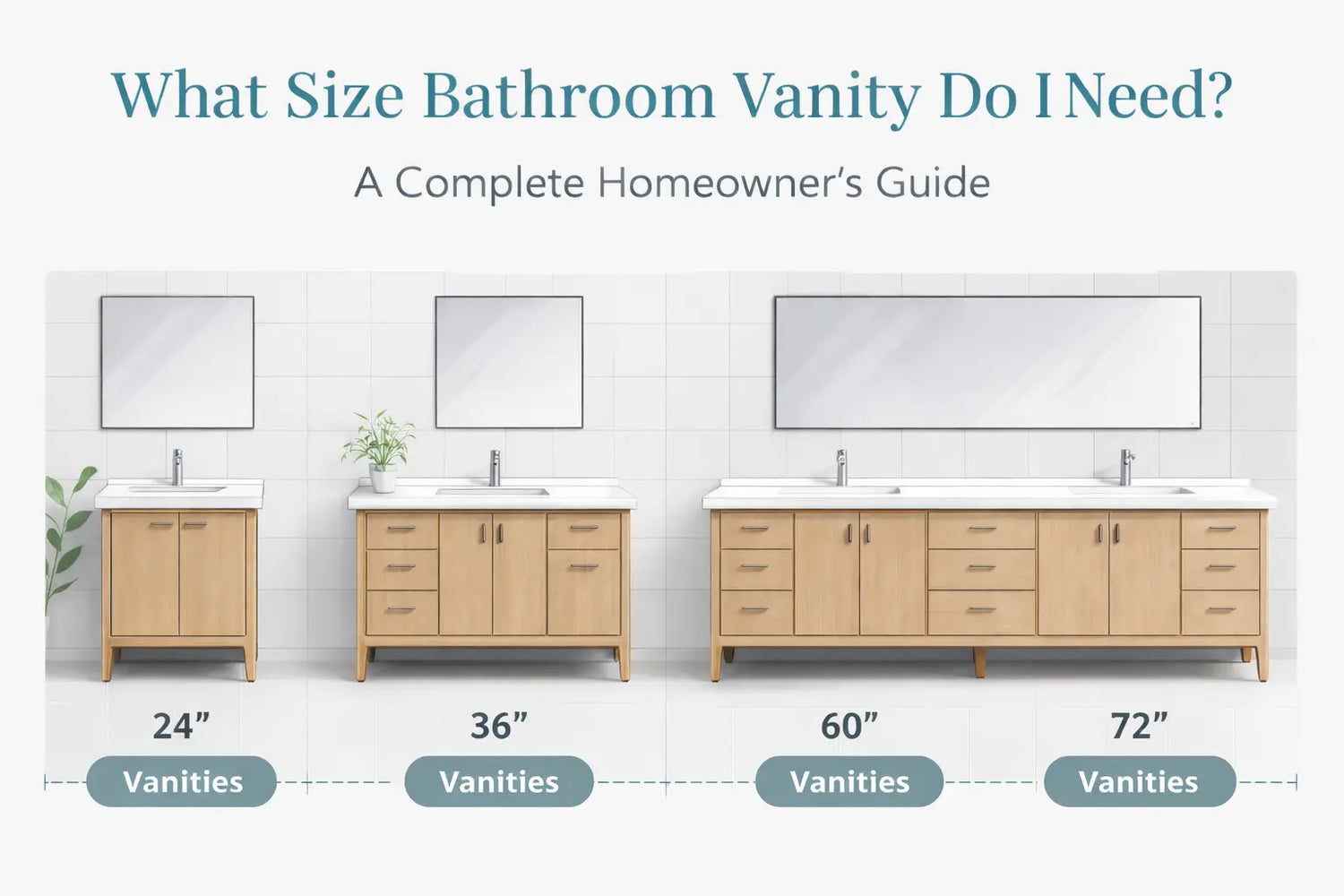
A Complete Homeowner’s Guide
Choosing the right bathroom vanity size is one of the most important decisions in a bathroom remodel. The wrong size can make a space feel cramped, limit storage, or create installation issues, while the right size improves comfort, flow, and long-term usability.
This guide walks you through standard vanity sizes, how to measure your space, and how to choose the best option for your bathroom layout.
Why Bathroom Vanity Size Matters
Vanity size affects more than just how your bathroom looks.
The right size vanity:
- Improves daily comfort and usability
- Provides adequate storage without crowding the room
- Maintains proper clearance for doors, drawers, and walkways
- Helps avoid costly installation mistakes
Many homeowners focus on style first and size second, but sizing should always come first.
Standard Bathroom Vanity Sizes (Quick Overview)
Bathroom vanities are typically categorized by width. Each size range works best for different bathroom types.
24–30 Inch Vanities
- Best for powder rooms and small bathrooms
- Typically single sink
- Minimal footprint with basic storage
36–48 Inch Vanities
- Common in guest bathrooms
- More countertop and drawer space
- Still compact enough for smaller layouts
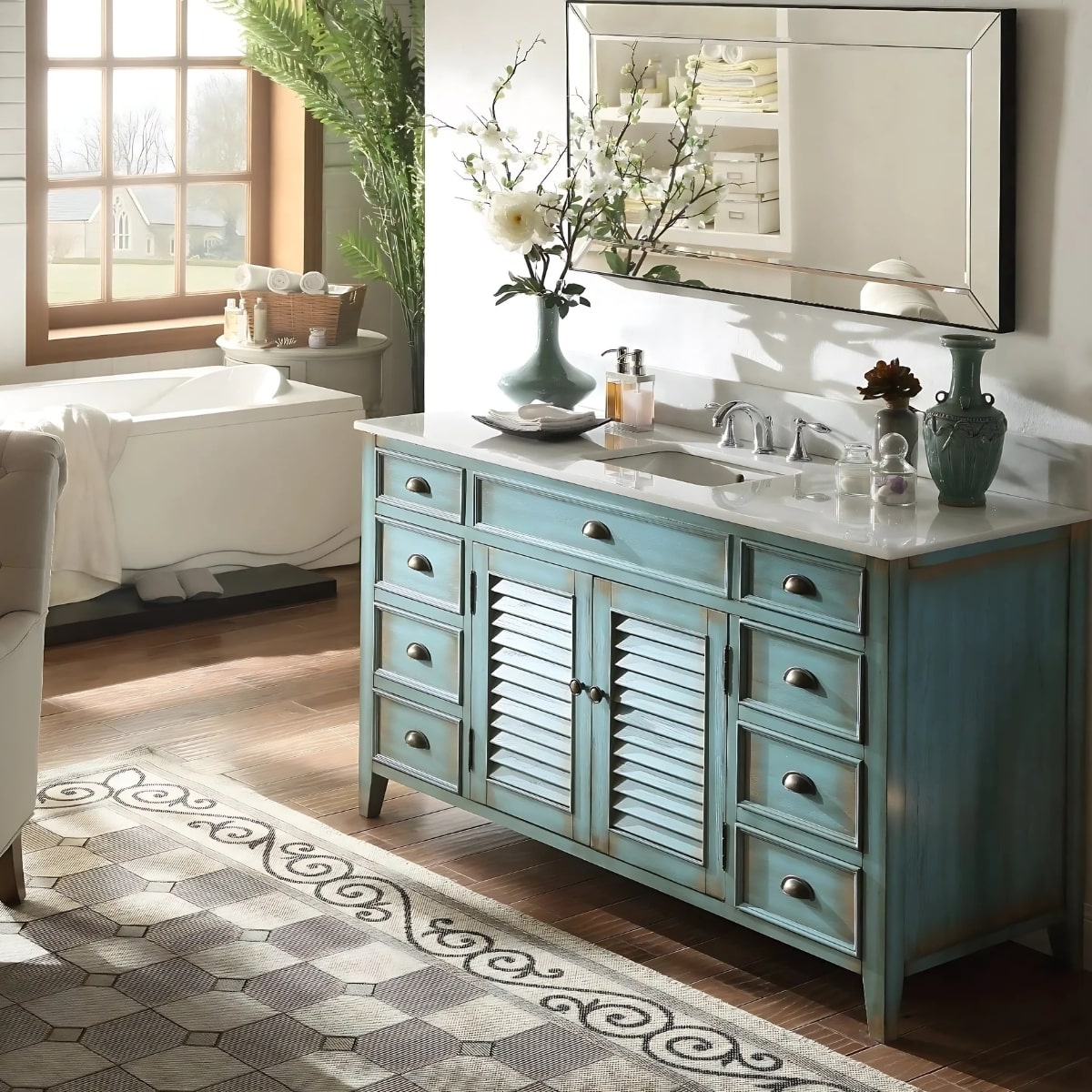
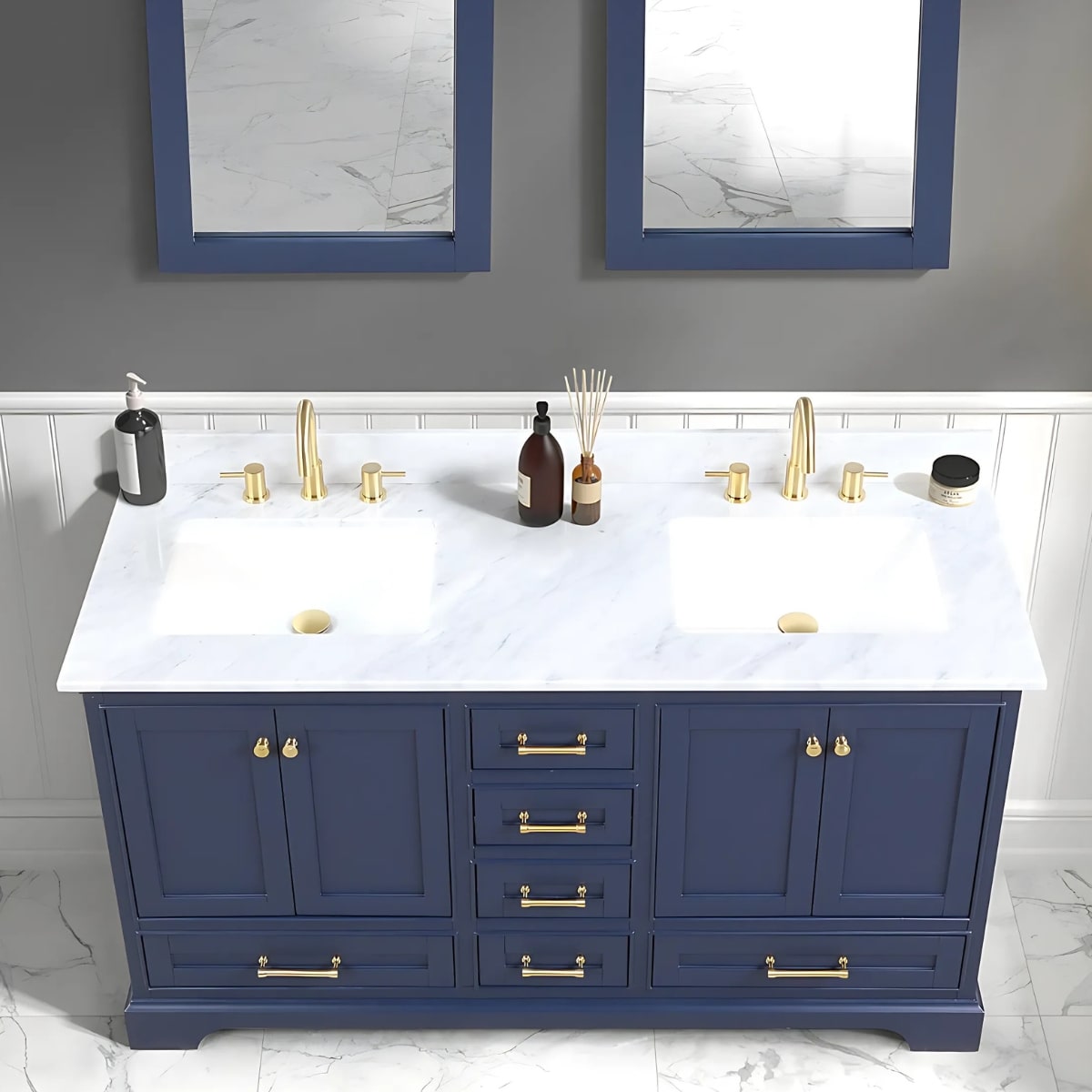
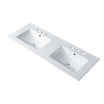
60 Inch Vanities
- Popular choice for primary bathrooms
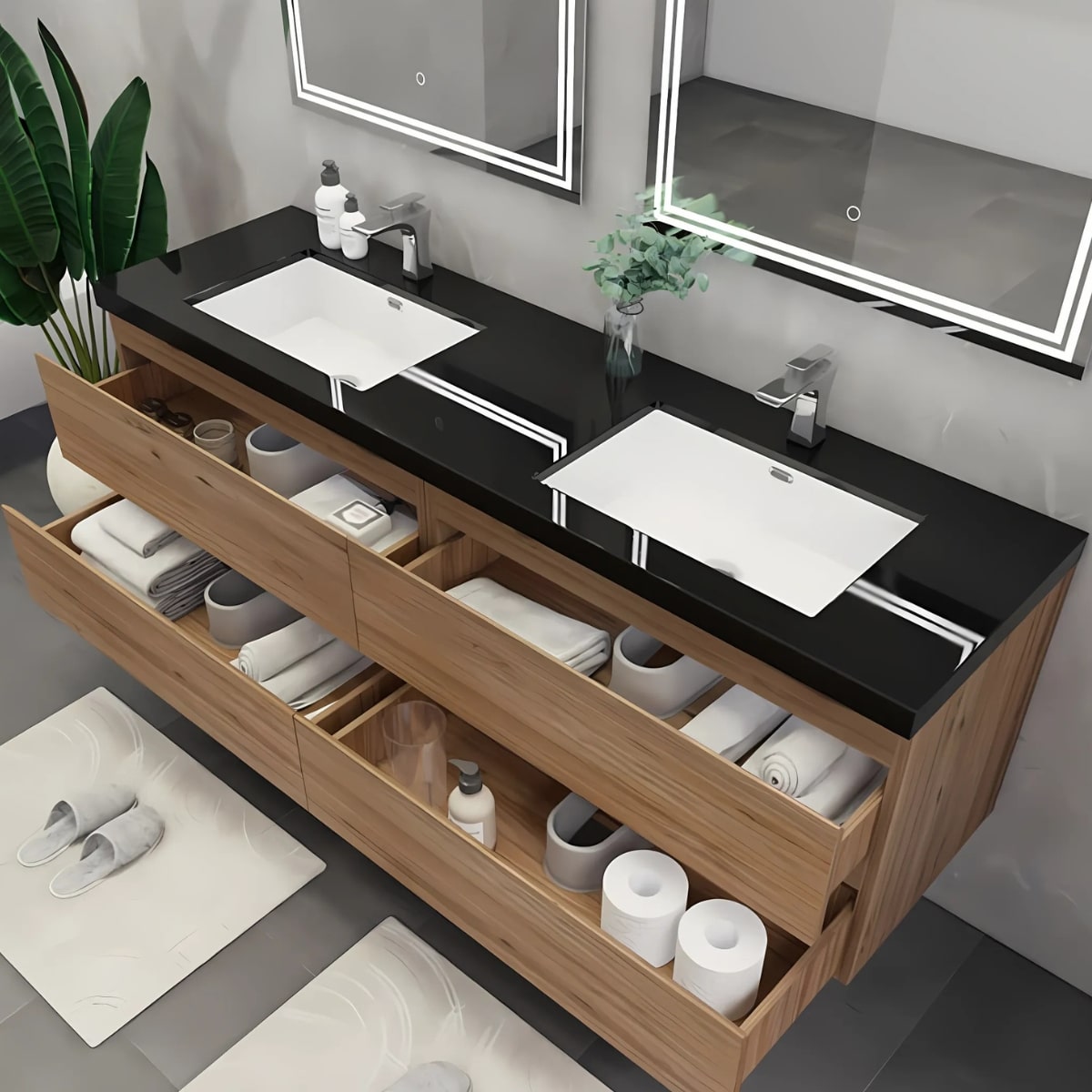
- Can accommodate single or double sinks
- Offers balanced storage and counter space
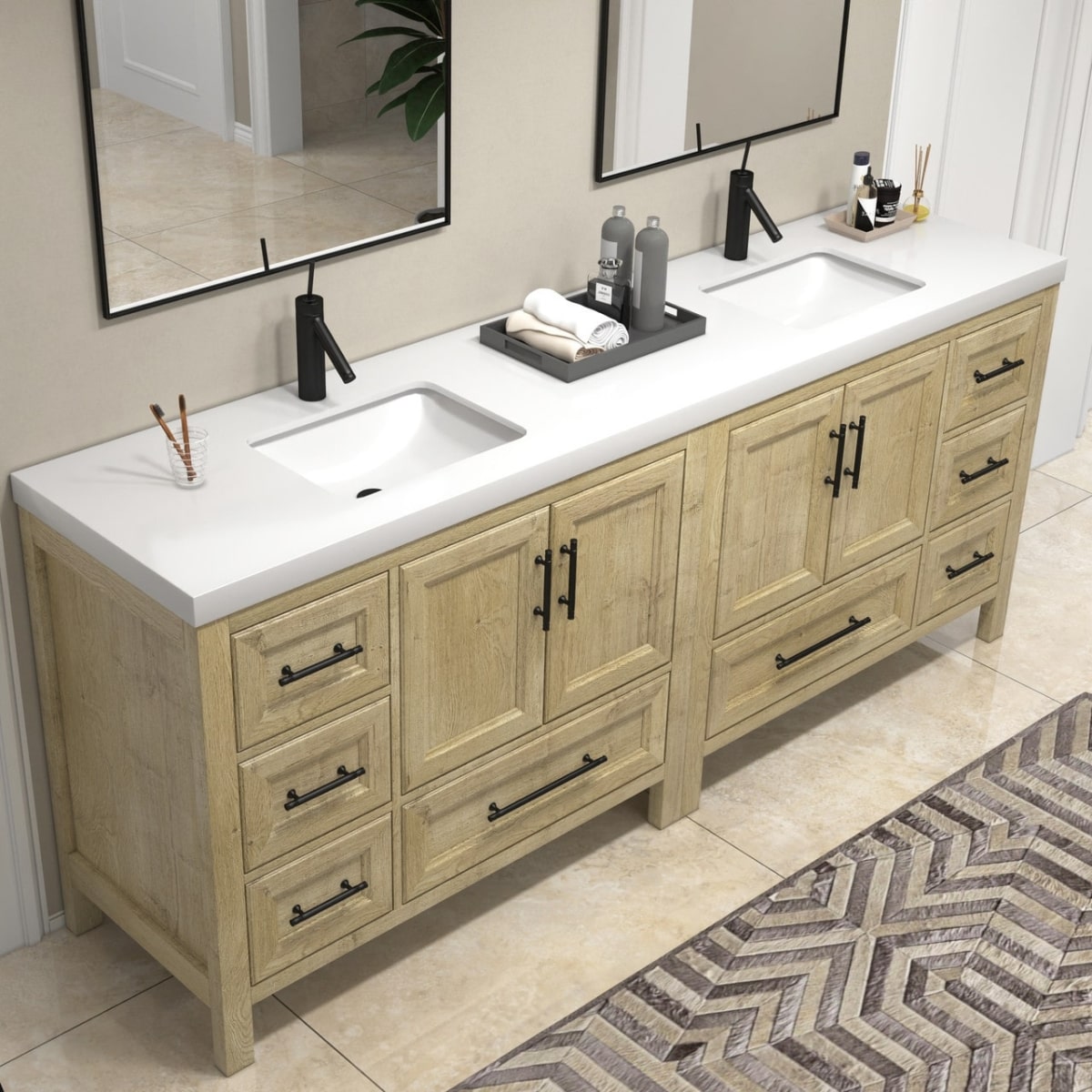
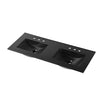
72 Inch Vanities
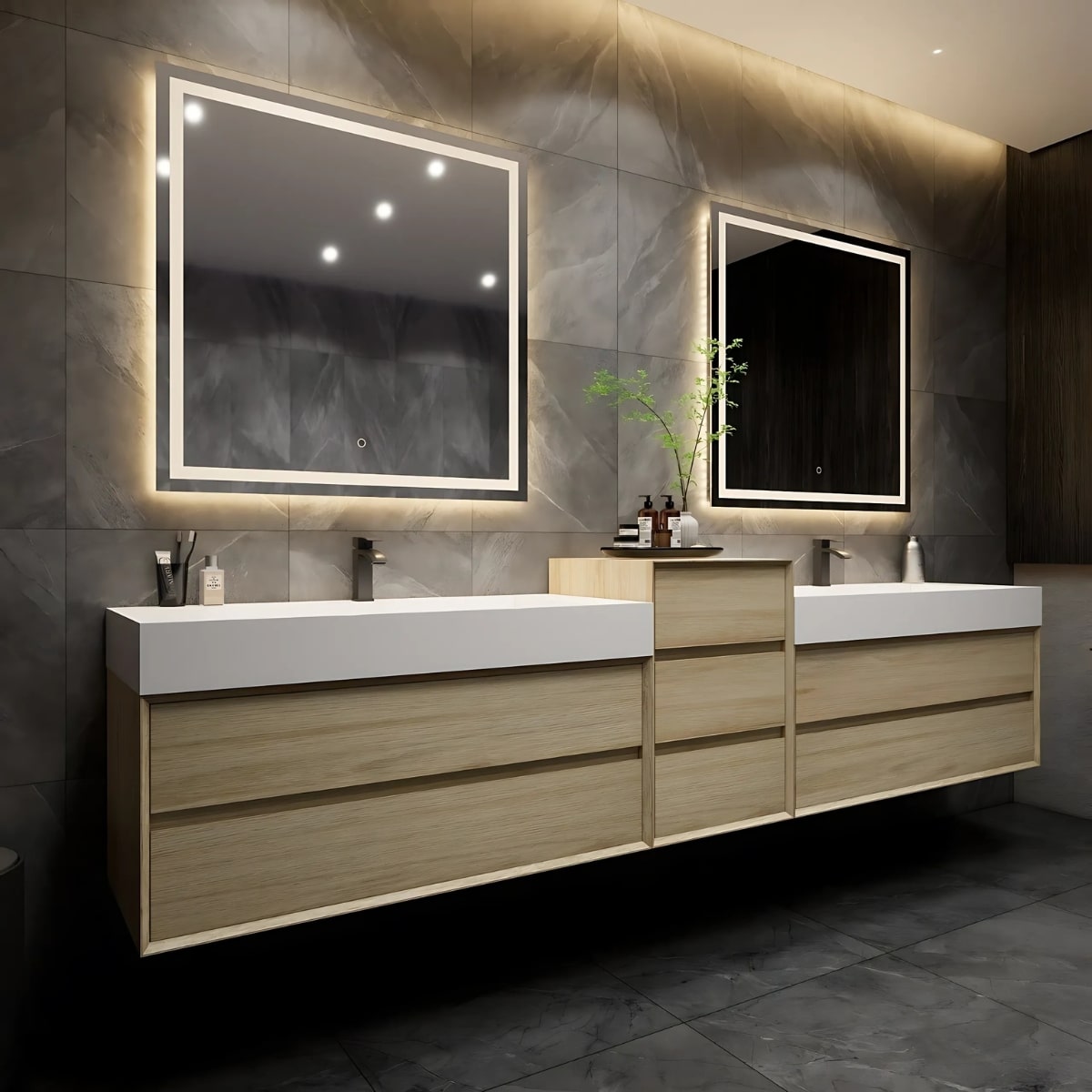
- Designed for larger primary bathrooms
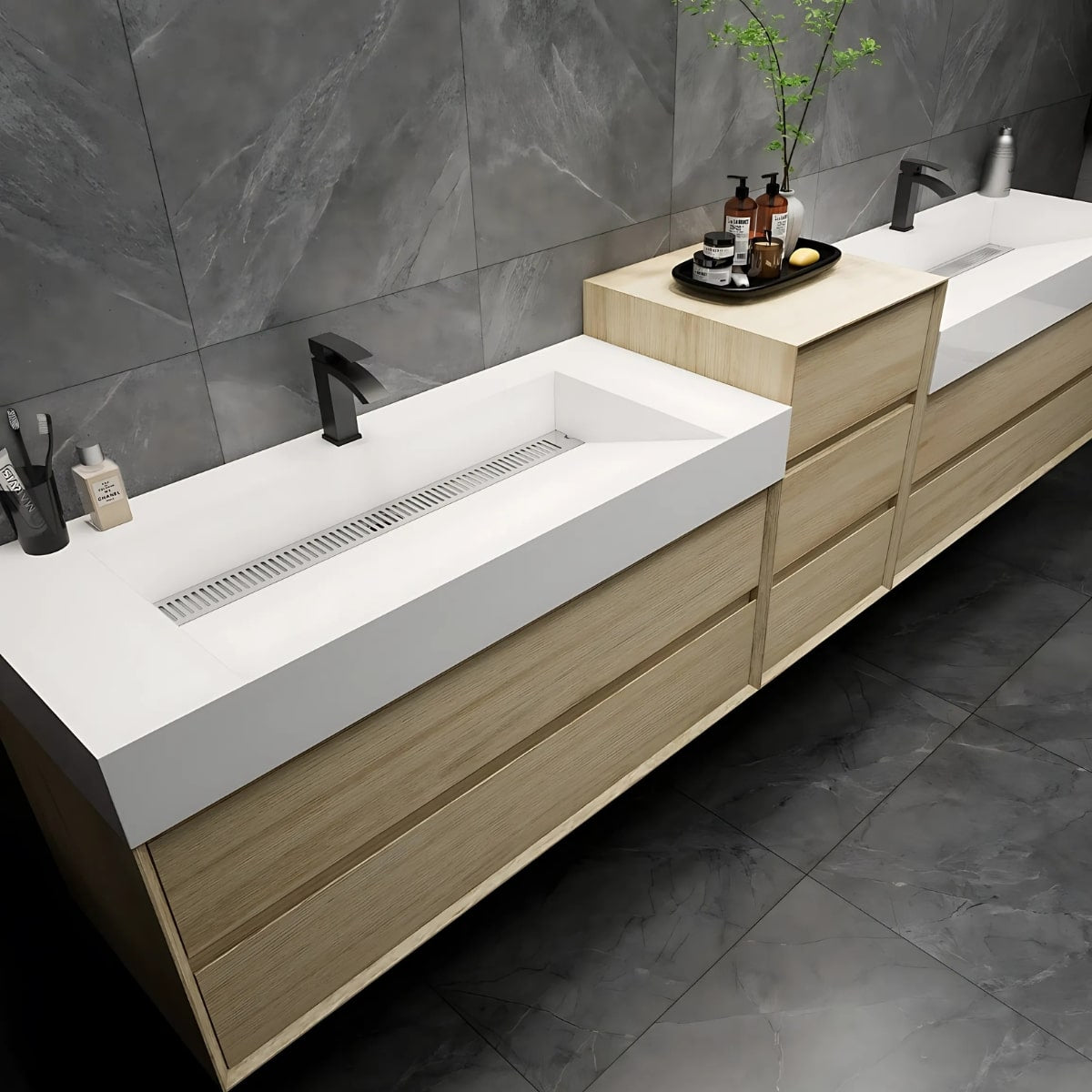
- Almost always double sink configurations
- Ideal for shared bathrooms with high daily use
Choosing the Right Vanity Size for Your Bathroom
Small Bathrooms
In small bathrooms, clearance matters more than storage volume.
- Choose narrower widths
- Consider shallower depths
- Stick with a single sink
Oversizing a vanity in a small space often causes traffic and door clearance issues.
Guest Bathrooms
Guest bathrooms benefit from balance.
- Enough counter space for convenience
- Avoid oversized vanities that overwhelm the room
- Storage needs are usually moderate
A 36–48 inch vanity often works well here.
Primary Bathrooms
Primary bathrooms are used daily and often by more than one person.
- Comfort and storage are priorities
- Double sinks can improve shared use
- Larger vanities feel more proportional
This is where 60-inch and 72-inch vanities shine. Many homeowners pair larger vanities with clean, minimalist styles such as Scandinavian bathroom vanities, which help maintain an open, uncluttered feel.
Single Sink vs Double Sink Vanities
Double sink vanities are popular, but they aren’t always the best choice.
When a Double Sink Makes Sense
- Bathroom width allows for proper spacing
- Two people regularly use the bathroom at the same time
- You want dedicated counter space for each user
Minimum Size Recommendations
- 60 inches: minimum for a functional double sink
- 72 inches: ideal spacing and comfort
In tighter spaces, a larger single sink with more counter space often works better than a cramped double sink.
Vanity Depth and Height (Often Overlooked)
Vanity Depth
- Standard depths usually range from 18 to 21 inches
- Shallow vanities work better in narrow bathrooms
- Deeper vanities offer more storage but reduce walkway space
- Vanity Height
- Standard height: around 32 inches
- Comfort height: around 34–36 inches
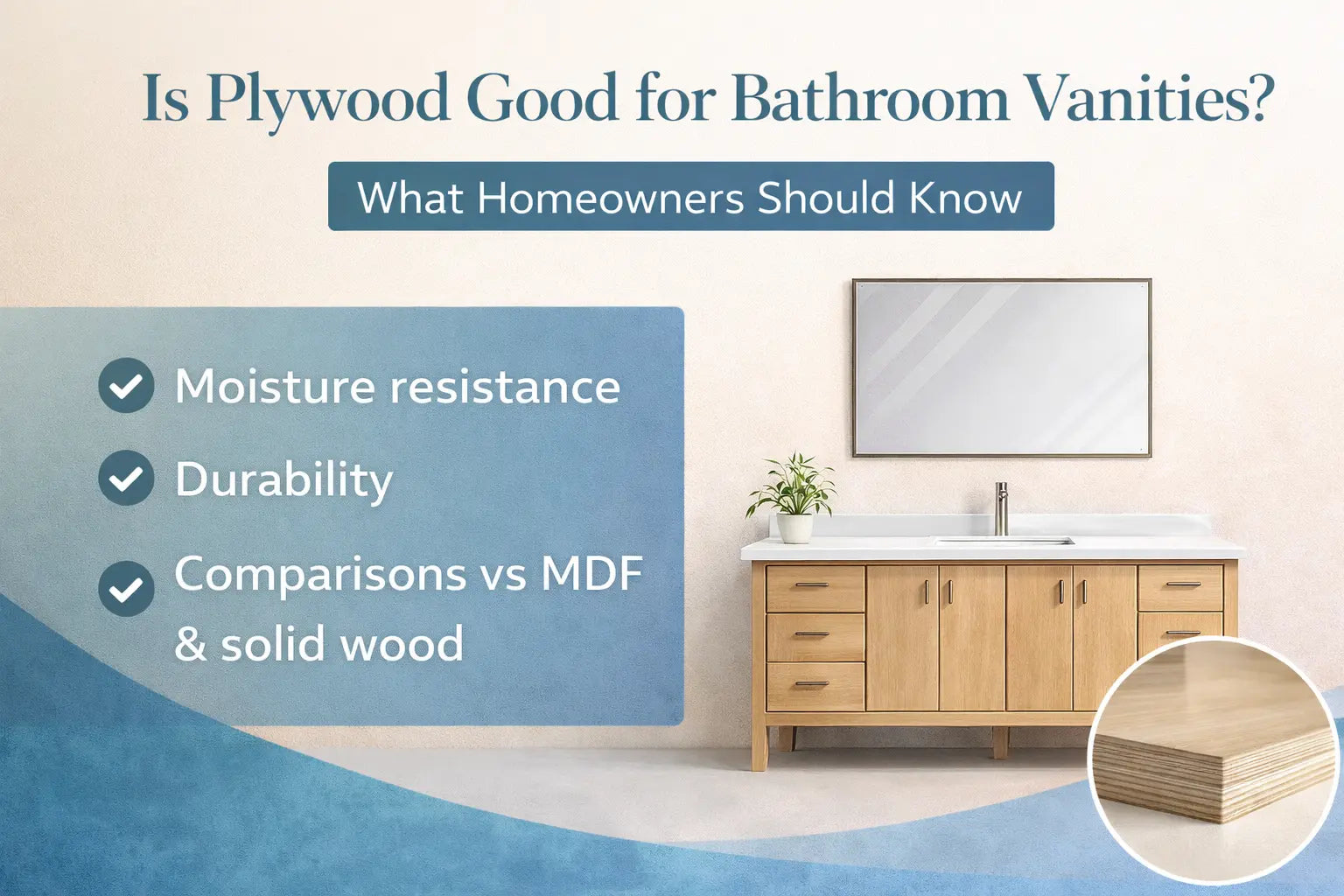
Comfort-height vanities are increasingly popular, especially in primary bathrooms. Material also plays an important role in how a vanity performs in a bathroom environment. Many homeowners choose plywood bathroom vanities for their durability and resistance to moisture.
How to Measure Your Space Correctly
Before choosing a vanity size, measure carefully.
Measurement Checklist
- Measure total wall-to-wall width
- Measure available depth from wall to walkway
- Account for door and drawer swing
- Locate plumbing lines
- Consider countertop overhang
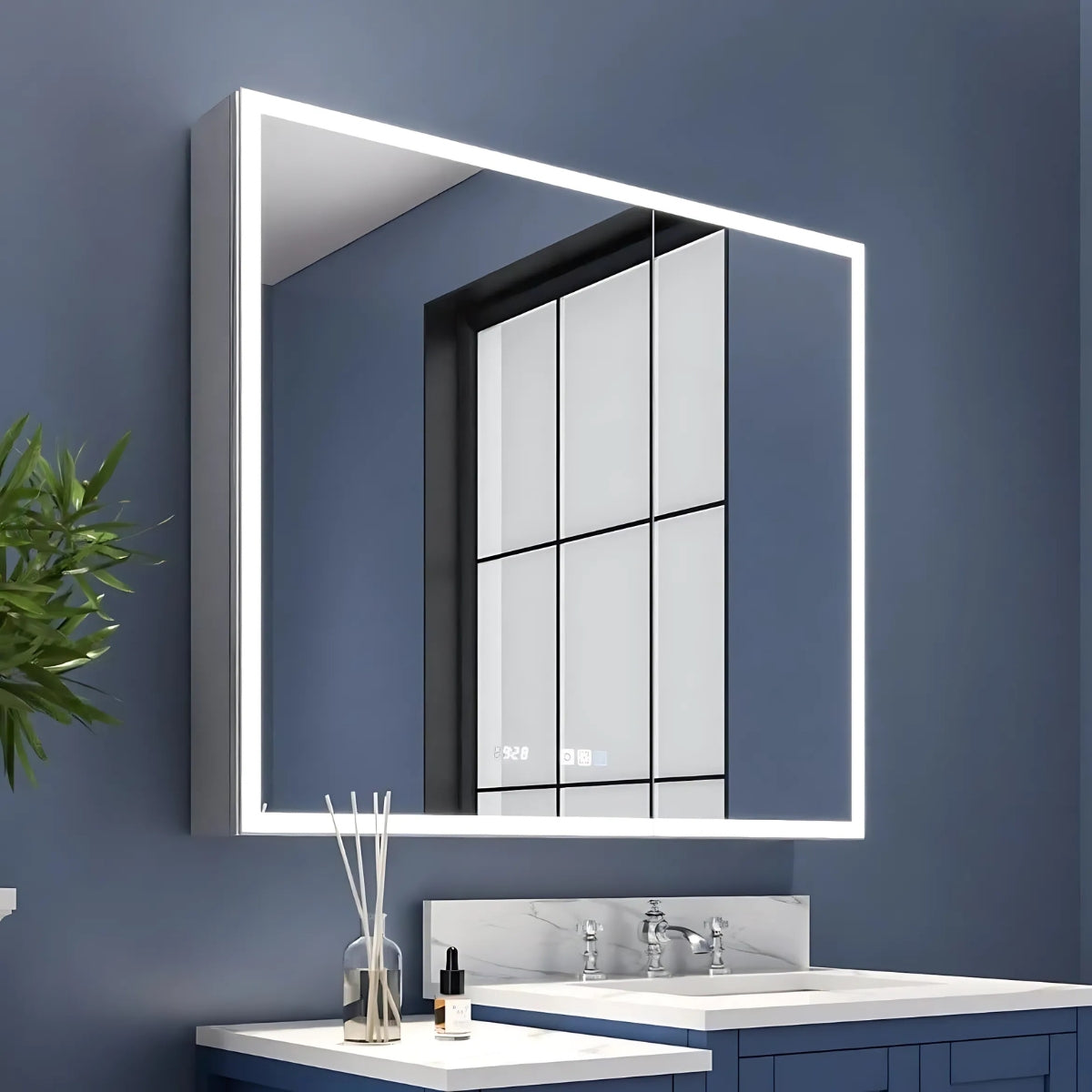
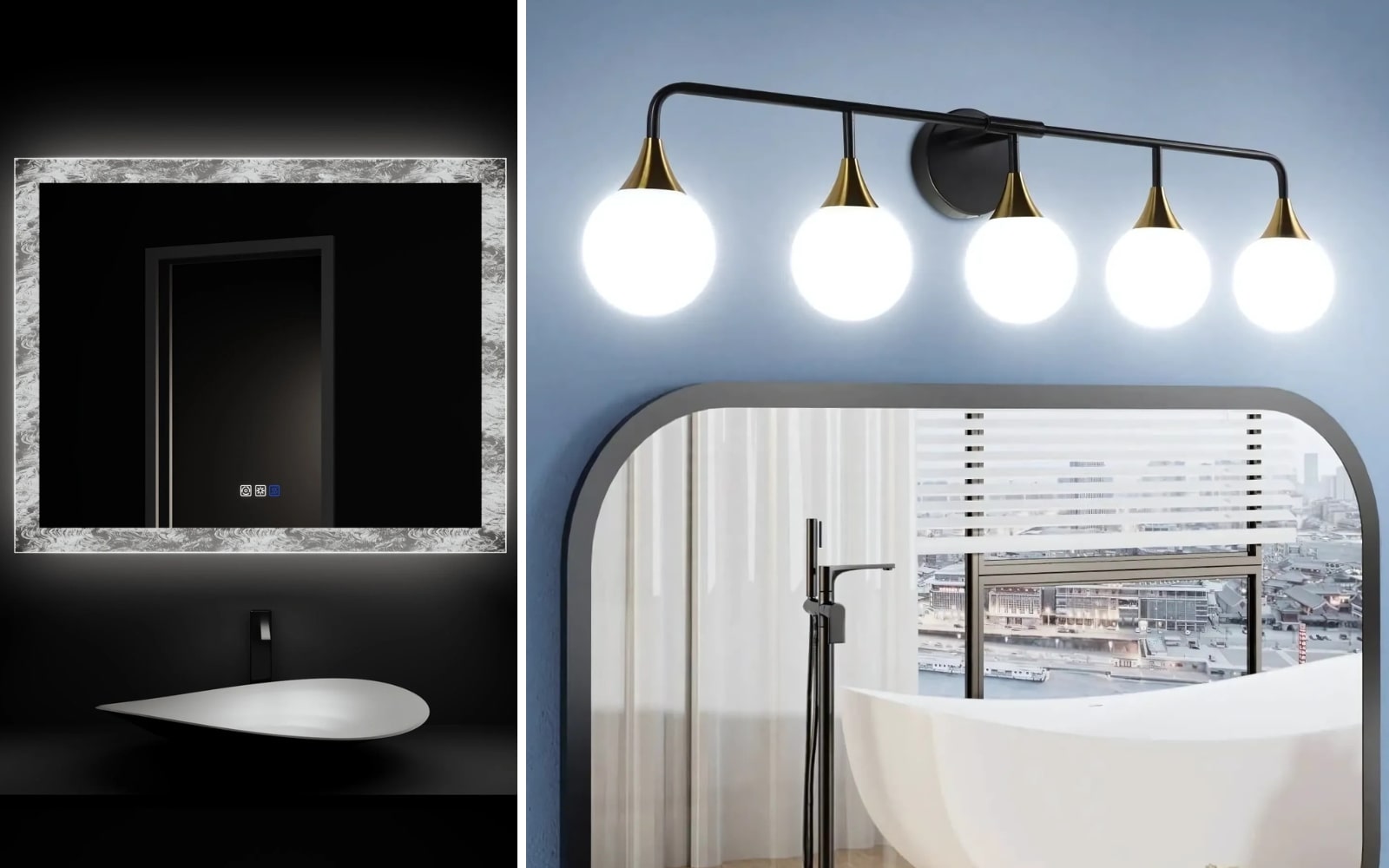
- Check mirror and lighting proportions
Accurate measurements prevent return headaches and installation delays.
Common Vanity Size Mistakes to Avoid
- Choosing a vanity that’s too wide for the wall
- Ignoring door and drawer clearance
- Forcing a double sink into a tight space
- Forgetting mirror scale and lighting placement
Avoiding these mistakes saves time, money, and frustration.
Quick Vanity Size Recommendations
- Powder rooms: 24–30 inches
- Guest bathrooms: 36–48 inches
- Primary bathrooms (single sink): 48–60 inches
- Primary bathrooms (double sink): 60–72 inches
When in doubt, size slightly smaller for better flow. Larger vanities are often available in a range of materials and styles, including plywood construction and minimalist designs.
How Vanity Plus Helps You Choose the Right Size
At Vanity Plus, we make choosing the right vanity size easier by offering:
- Clearly organized size-based collections
- Detailed product dimensions
- Educational buying guides to support confident decisions
Our goal is to help you select a vanity that fits your space, your routine, and your long-term needs.
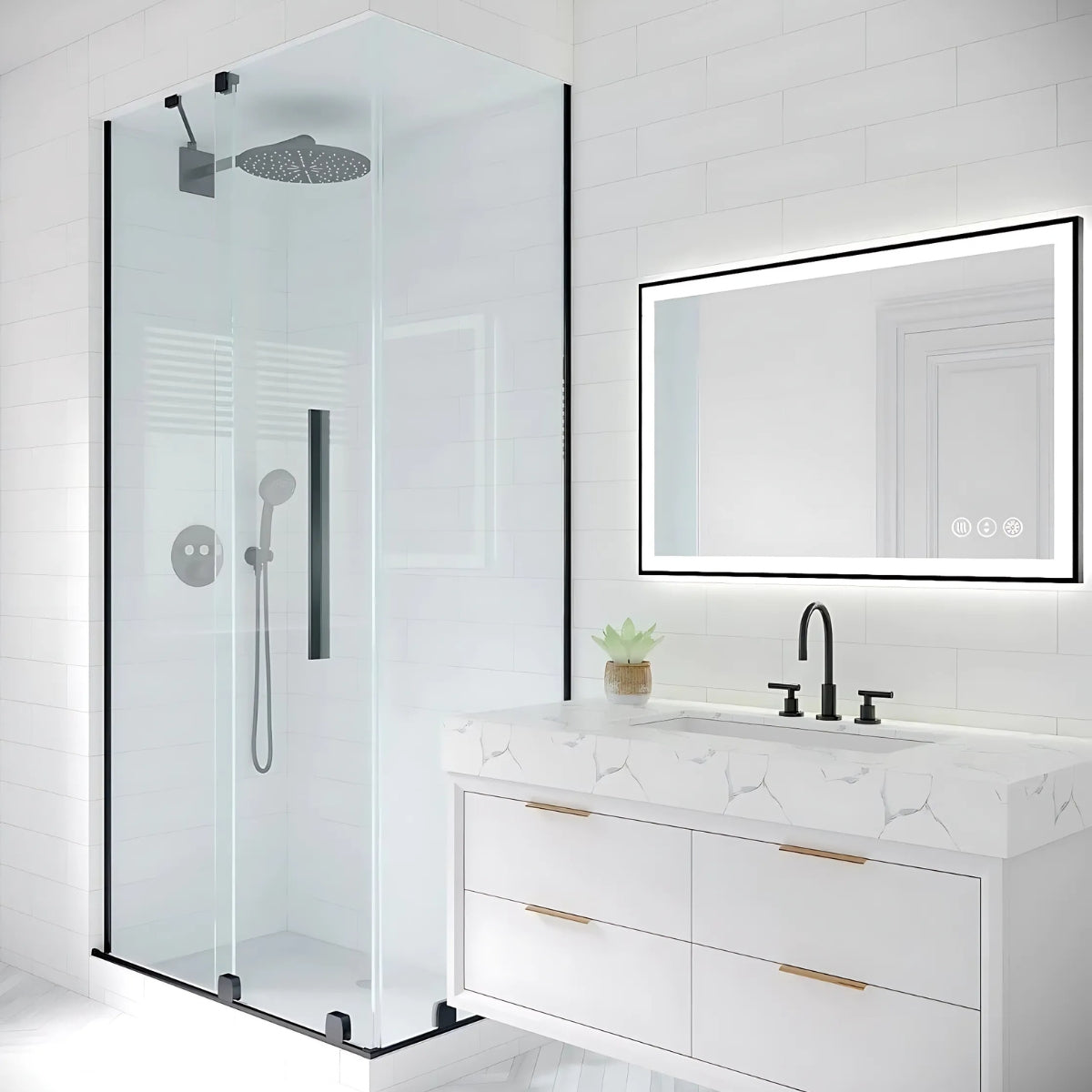
Once you have your measurements, compare contemporary bathroom vanities by width, storage layout, and sink configuration to find a design that suits your space.


Leave a comment
All comments are moderated before being published.
This site is protected by hCaptcha and the hCaptcha Privacy Policy and Terms of Service apply.